



Amla, Reetha & Shikakai: Why Dadi's Formula Still Beats Your Shampoo
Long before shampoo came in bottles, hair in this part of the world was washed with a paste made from three things: amla, reetha and shikakai. No lather to speak of, no fragrance, no claims on a label. And yet it is still the formula that herbal brands come back to, because the three ingredients do three different jobs that happen to cover everything hair needs from a wash.
Here is what each one actually does, and why using them together makes more sense than any of them alone.
Reetha (soapnut): the cleanser
Reetha is the reason the mixture cleans at all. Soapnut shells contain saponins — plant compounds that foam in water and lift away oil and dirt. It is a genuine surfactant, just a far gentler one than sodium lauryl sulphate.
The practical difference is what it leaves behind. Sulphates strip the scalp's sebum almost completely, which is why hair squeaks after washing and then turns greasy two days later as the scalp overcompensates. Reetha removes the dirt and excess oil but leaves the protective layer intact, so the scalp does not go into panic production.
If your herbal shampoo doesn't foam like your old one — that's reetha, not a defect. Lather is a marketing habit, not a measure of cleaning.
Shikakai: the conditioner and detangler
Shikakai literally translates as 'fruit for hair'. It cleans mildly too, but its real contribution is conditioning — it leaves hair slippery enough to comb through without the coating that silicone conditioners deposit.
It is also naturally low in pH, which matters more than it sounds. Hair is happiest slightly acidic. Alkaline washes make the cuticle scales lift, which causes frizz, tangling and that rough, straw-like feel — exactly the problem hard water already creates in most Pakistani cities. Shikakai pulls in the other direction, helping the cuticle lie flat.
Amla: the strengthener
Amla, the Indian gooseberry, is one of the richest natural sources of vitamin C and is the ingredient most associated with hair strength and colour retention across South Asia. In traditional use it is credited with reducing premature greying, strengthening the root and giving hair its deep, dark finish.
In a shampoo its role is nourishment rather than cleaning. It is also the reason herbal shampoos often have a slightly dark or greenish tint — that is plant matter, not dye.
Why the three work better together
Each of the three has a weakness on its own. Reetha alone cleans but leaves hair rough and hard to comb. Shikakai alone conditions but does not clean deeply enough for an oily scalp. Amla alone nourishes but has barely any cleansing action at all.
Together they cover the whole wash: reetha lifts the dirt, shikakai smooths the cuticle and makes the hair manageable, amla feeds the strand. It is a genuinely well-balanced formula that happened to be worked out over centuries rather than in a lab.
What to expect when you switch from a sulphate shampoo
Be prepared for an adjustment period. For the first two or three washes the hair may feel heavier, or not as squeaky-clean as you are used to. That is your scalp recalibrating after years of being stripped and over-producing oil in response. Most people find it settles by the fourth wash.
Wash 1–2 — Less lather, hair feels different. Normal. Don't panic and switch back.
Wash 3–4 — Scalp oil production starts balancing. Hair stays clean longer between washes.
Week 3–4 — Less frizz, less breakage when combing, scalp less itchy.
Week 8+ — Noticeably stronger feel at the root, better texture overall.
Getting the most out of a herbal wash
Wet hair thoroughly first — herbal shampoo spreads poorly on half-wet hair.
Apply to the scalp, not the lengths. The lengths get cleaned by the runoff.
Massage 2–3 minutes with fingertips. Give the herbs contact time.
If you oiled beforehand, apply shampoo to dry oiled hair first, then wet it. It emulsifies far better.
Rinse longer than you think you need to — leftover residue is what makes hair feel heavy.
Finish with the coolest water you can stand.
Frequently Asked Questions
The Formula, Properly Made
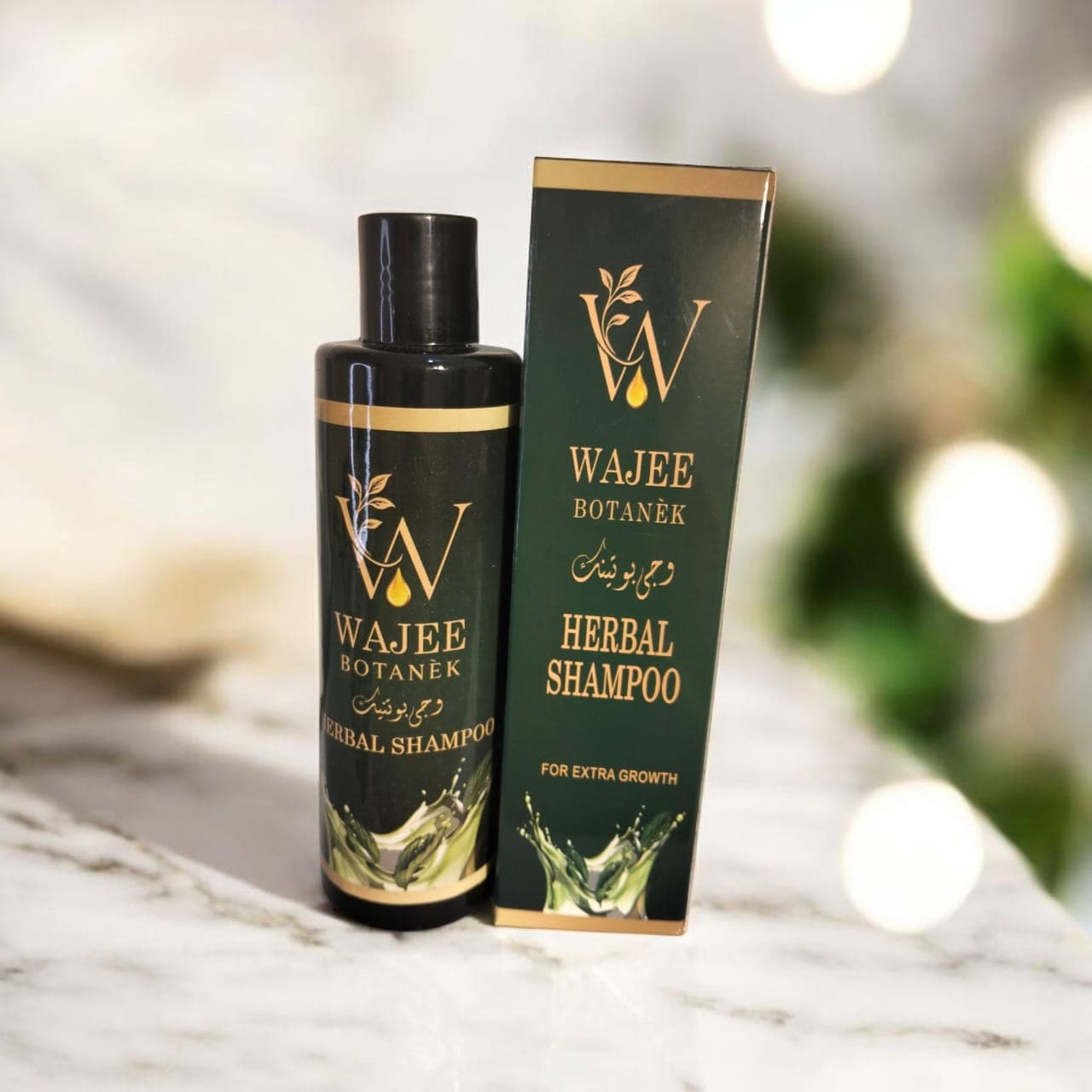
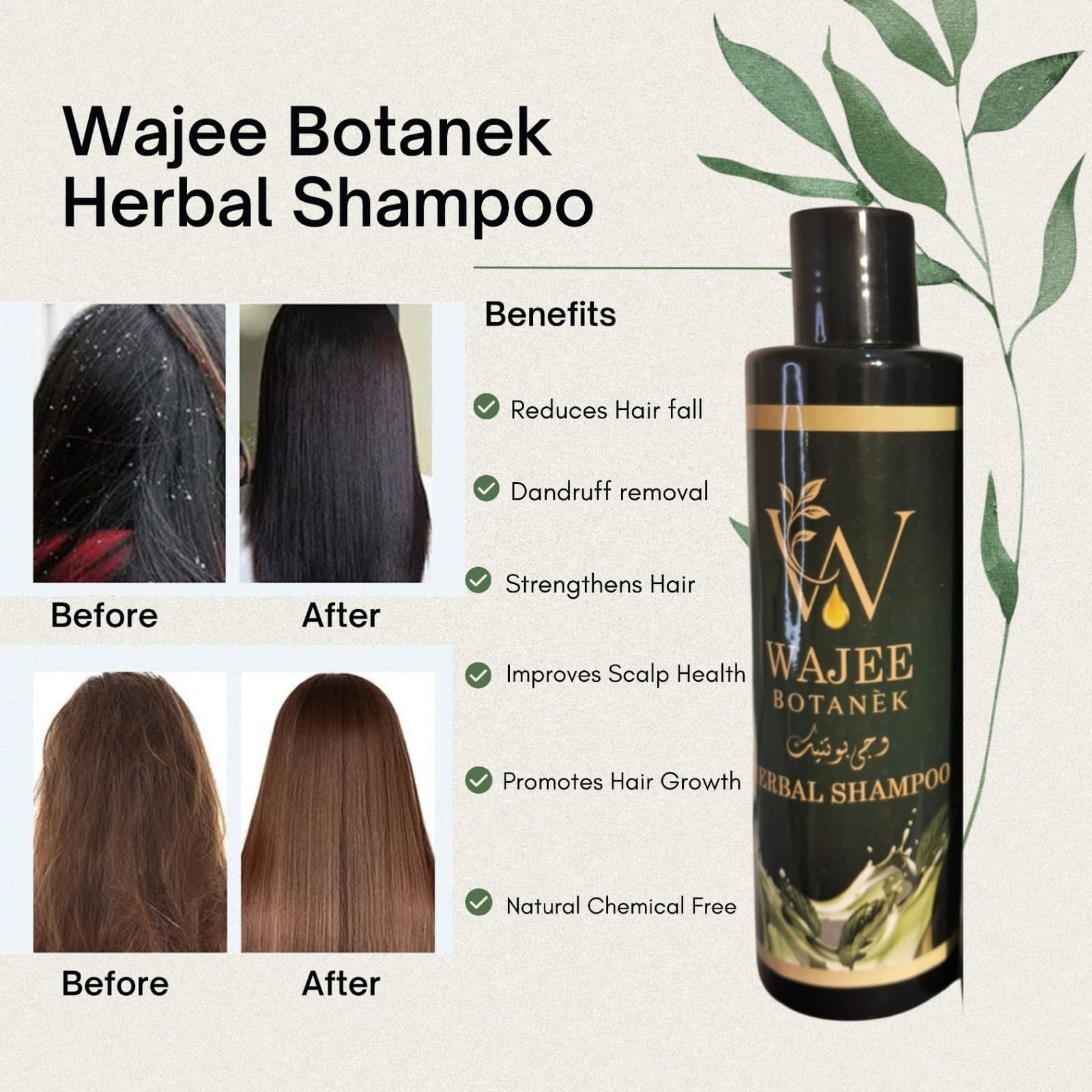
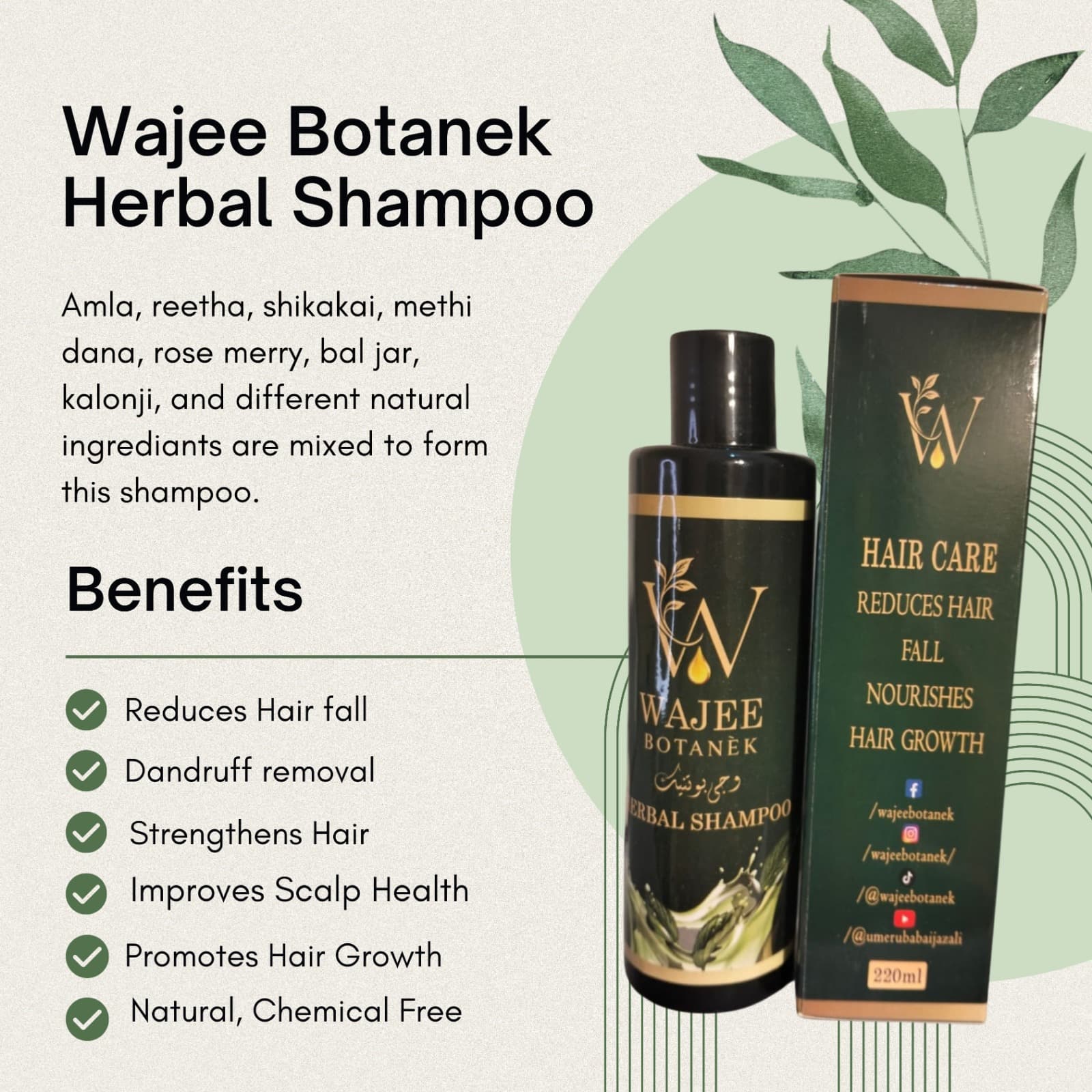
Our Herbal Shampoo is built on amla, reetha, shikakai and methi dana, with kalonji, curry patta, aloe vera and bhringraj alongside — no harsh sulphates.
Herbal Shampoo
PKR 1,500
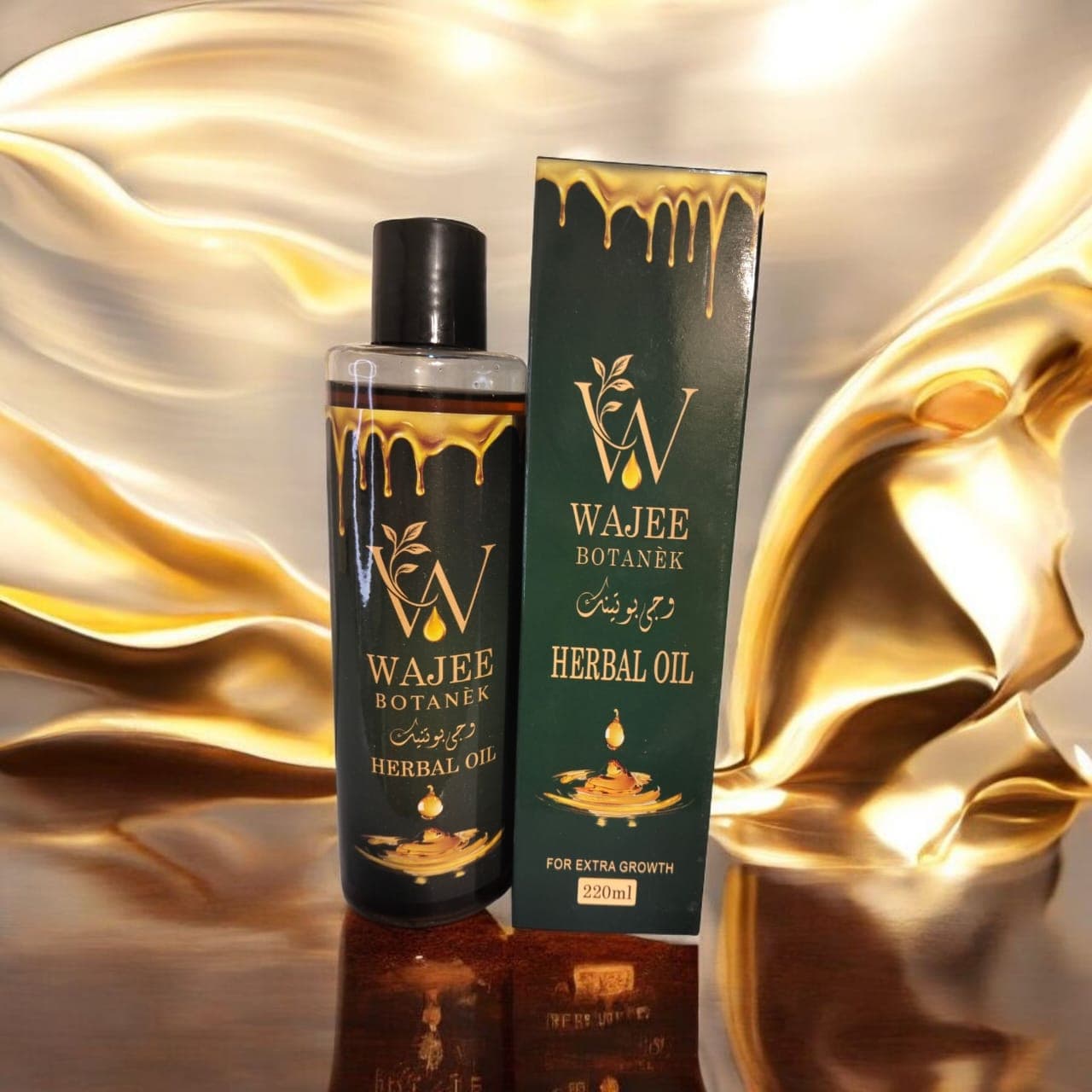
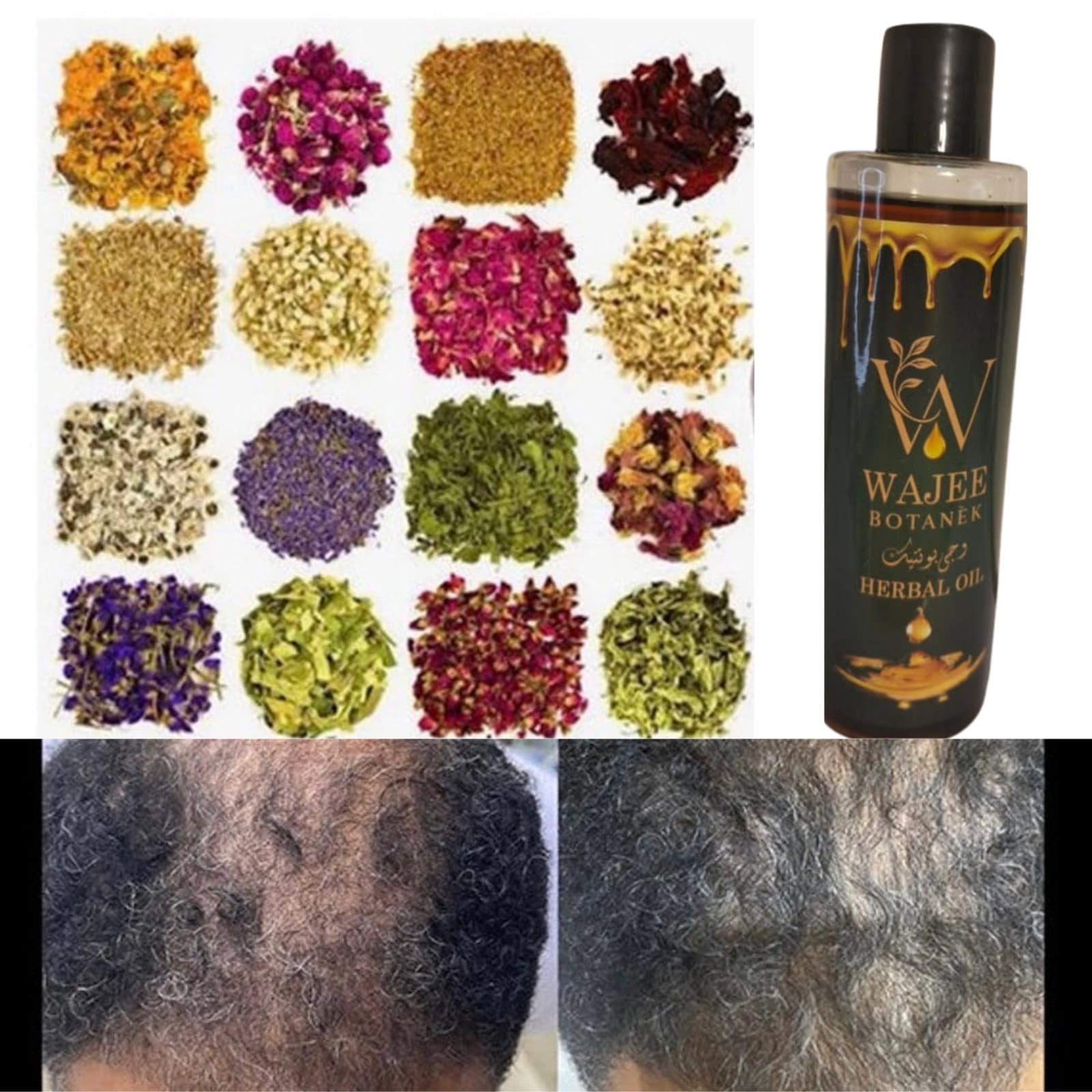
Herbal Oil
PKR 2,500
Keep Reading
Khushki (Dandruff) Ka Herbal Ilaj: Scalp Care for Pakistan's Weather
Dry flakes and oily yellow flakes are two completely different problems with two different fixes. Treating the wrong one is why most dandruff routines fail.
Best Herbal Hair Oil in Pakistan 2026: An Honest Buyer's Guide
Every hair oil on the market claims to be the best. Here's what actually separates a good herbal hair oil from an expensive mineral-oil blend — and how to judge one before you buy.
Hair Fall in Pakistan: 7 Real Reasons Your Hair Is Shedding (And the Herbal Fix)
Losing 50–100 hairs a day is normal. Losing clumps in the shower is not. Here are the seven causes we see most often in Pakistan — and the herbal routine that fixes the ones you can control.